
![]()
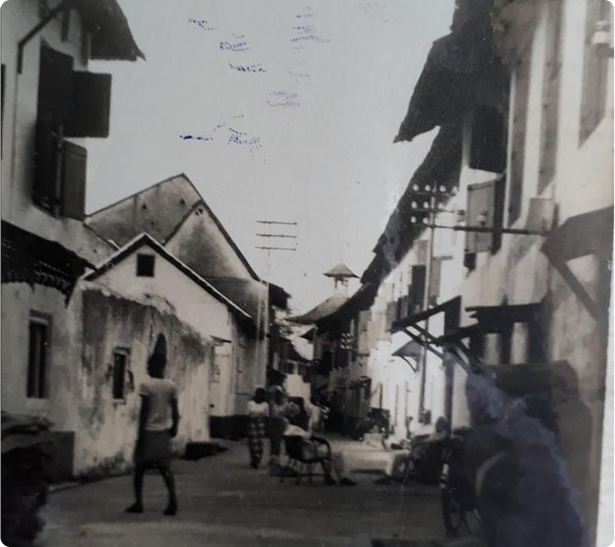
In Europe, the name Jew Town might evoke connotations associated with that of a Jewish ghetto, but not so in India. In the once princely state of Cochin, the name ‘Jew Town’ is nostalgia incarnate, where wonderful memories intertwine with a sense of longing to spend time there.
One can’t speak of life in Jew Town without addressing the ever constant warmth and comforting sense of community that encompasses the very essence of the neighborhood. Affectionately referred to as Kambolam, this sense of harmony and camaraderie ensures no one in the community is ever truly alone – whether in moments of joy and sorrow, sickness and health, or youth and old age.
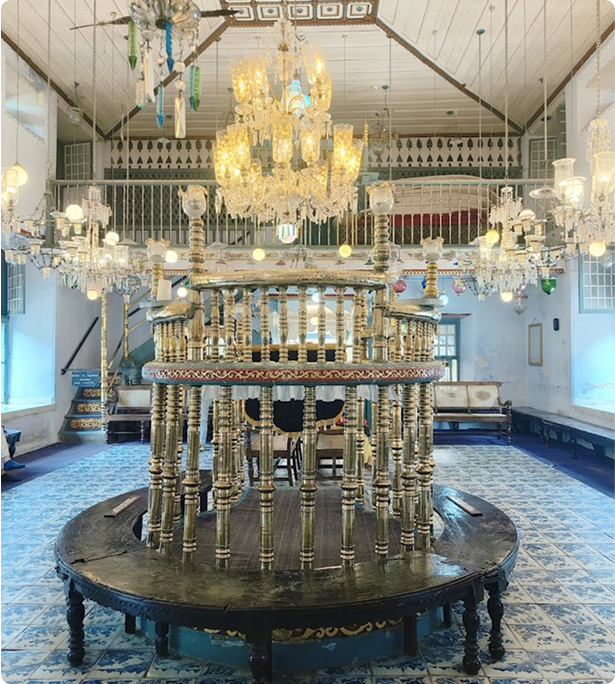
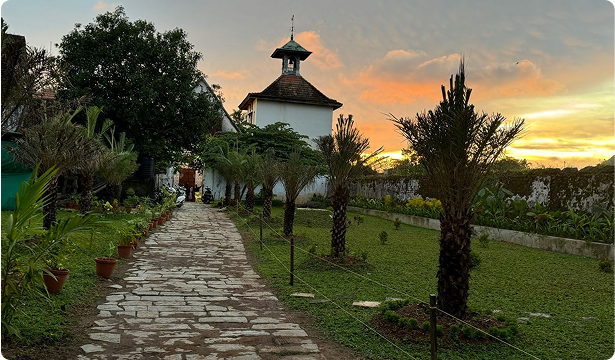
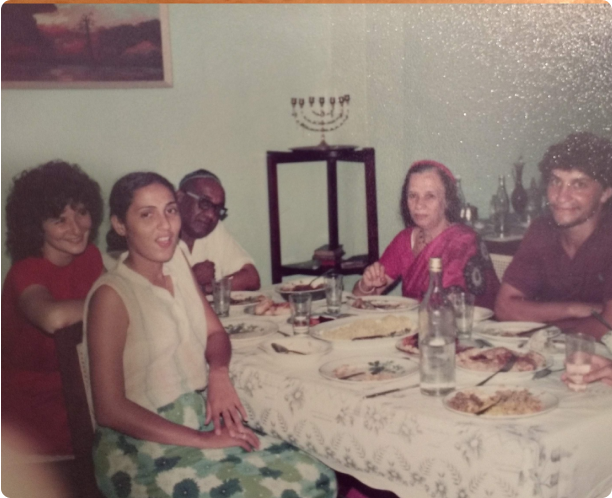
The Synagogue has always stood as the cornerstone of life in Jew Town. During times when the community flourished, daily prayers were conducted within its hallowed walls. These prayers signified the commencement and conclusion of the Jewish Sabbath and festivals – periods when all servile work was suspended and families gathered around their tables for songs and sumptuous meals.
Moreover, the Synagogue served as the epicenter for community mitzvot (good deeds). It hosted significant life events such as the circumcision of newborn male infants, coming of age barmitzvoth for boys, and wedding ceremonies for brides and grooms . Weddings in Jew Town were particularly grand, extending over a week, with the entire street adorned with colored lights and festive bunting.
Members of the Jewish community pursued their education in Cochin, attending secular schools and colleges alongside students of diverse religious backgrounds. Many generations were educated in the same esteemed institutions in Fort Cochin, including St. Mary’s Convent and St. John de Britto.

Evening Relaxation
The proximity of its homes further exemplified the closeknit nature of Jew Town. Neighbors frequently visited each other's residences, helping foster a strong sense of community and harmony. It is believed that these homes once featured interconnecting doors, allowing residents to move freely between houses without using the front entrances facing the street.

The ground opposite the synagogue – was used for meetings, football games
The ground opposite the synagogue, known as Palliveedu, served as the communal playground where football, badminton, and other games were played with local friends. A cherished memory of this area is Kammath’s restaurant, which still stands today. The restaurant shared a window with Palliveedu, where one could buy piping hot dosas when they were too lazy to walk around to the main entrance.

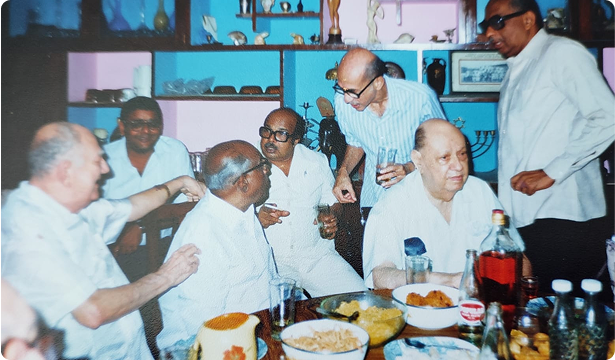
Young community members at a Friday evening gathering
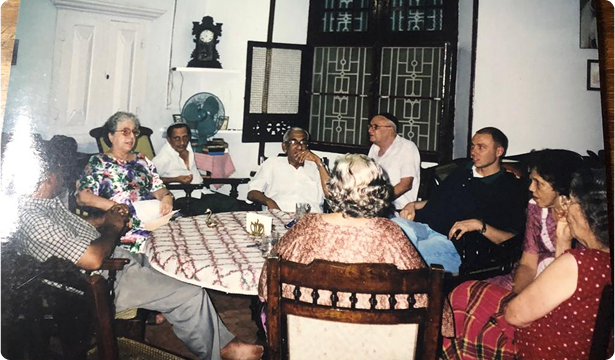
Jew Town, being a deadend street and primarily a residential area, transformed into a quiet enclave for the community in the evenings once the daytime crowds had dispersed. During these tranquil hours, residents would gravitate towards the houses in the center of the street for impromptu gatherings, often hosted by Sarah and Dickey Cohen or Reema and Gummy Salem. Chairs were brought out, and the air was filled with lively conversations, debates, and discussions, reflecting the vibrant communal spirit of Jew Town.

Glimpses into a Sabbath evening at Queenie and Sammy’s
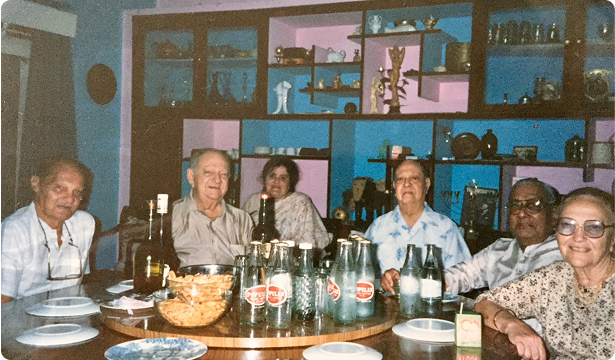
The late Sammy and Queenie Hallegua graciously hosted informal Friday evening gatherings, welcoming community members and visitors attending synagogue prayers. These gatherings were marked by a diverse array of guests and lively conversations, enriched by an abundance of local and Jewish delicacies generously provided by the hosts. Among the unforgettable treats were Kadathala pastels, a beloved Cochini delicacy that became a staple at these cherished events.

In the days before, cell phones, television, and DVDs, cards and board games were beloved pastimes in Jew Town. The community, like the rest of the region, was also captivated by the allure of movies. Whether Malayalam, English, or Hindi, cinema was a significant part of social life. Every Sunday evening, groups of 10 to 15 residents and their friends would set out to watch the latest film release.