Designscape
of the Synagogue

An Architectural Marvel

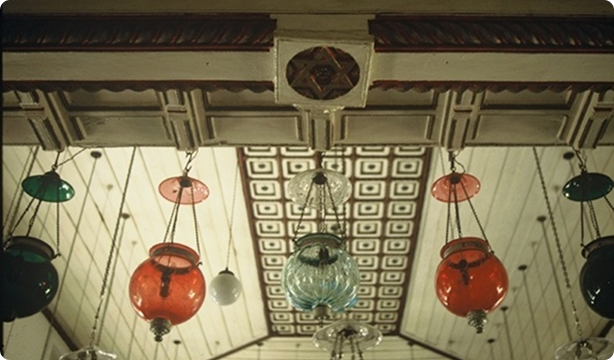
The Paradesi Jewish Synagogue in Jew Town, Kochi stands as a breathtaking testament to the harmonious union of Jewish and Indian design traditions. From the intricately detailed woodwork, ornate chandeliers, and handpainted tiles, the structure is a visual wonder that showcases the enduring impact of cultural influences spanning centuries.

The Paradesi Synagogue, the oldest synagogue, is not the only synagogue in Cochin.
There are a number of other synagogues, a testimony to the presence of Jewish communities in Kerala.

Credits: E.G, D.K, S.K

The Clock Tower: Keeper of Time and History

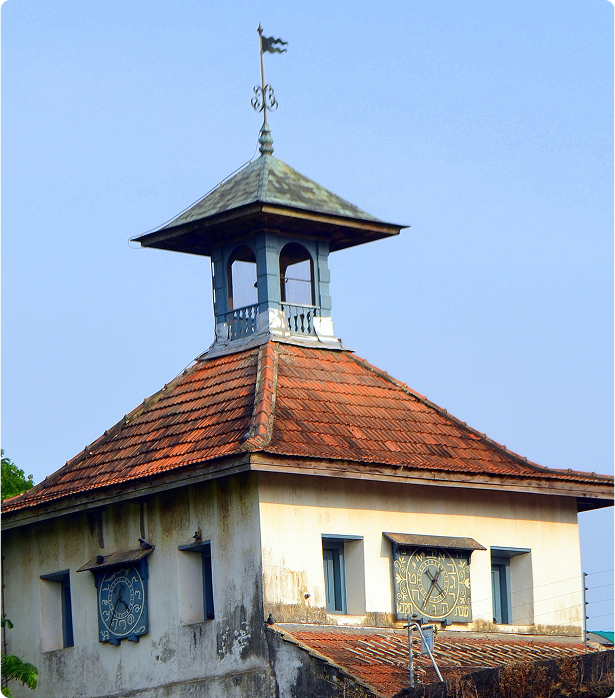
One of the first things a visitor will spot while approaching the synagogue is the clock tower, proof of how diverse influences can always find a common place. The clock’s dial features Roman, Hebrew, Arabic, and Malayalam numerals – evidence of the various influences that give the synagogue and its surroundings a unique identity.

The 45 feet clock tower was commissioned by a renowned local businessman, Ezekiel Rahabi in 1760, and was fully functional till 1930.
Credits: E.G, D.K, S.K

The Synagogue’s Structure and Sephardic Heritage

The blueprint of the Paradesi Synagogue finds its roots in Sephardic Jewish traditions. Facing eastward, the synagogue's orientation toward Jerusalem is a poignant reminder of its connection to the spiritual heartland. At the entrance, two brass pillars stand as an emblem, an ode to the pillars in the Temple of Solomon.

The synagogue itself was designed to ensure easy communal worship. The elevated pulpit in the center, called the Bimah, where the leader of the prayer, the Hazzan, guides the gathering.

Credits: E.G, D.K, S.K

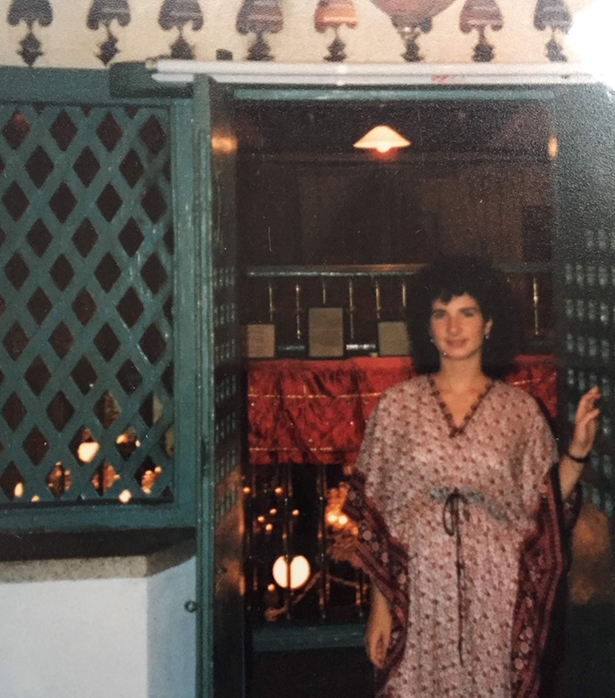
Silver chandeliers, imported from Belgium, light up the space. In the heart of the synagogue, is the "tamid," the everlasting lamp that has illuminated Jewish synagogues since the era of Solomon.

Credits: E.G, D.K, S.K

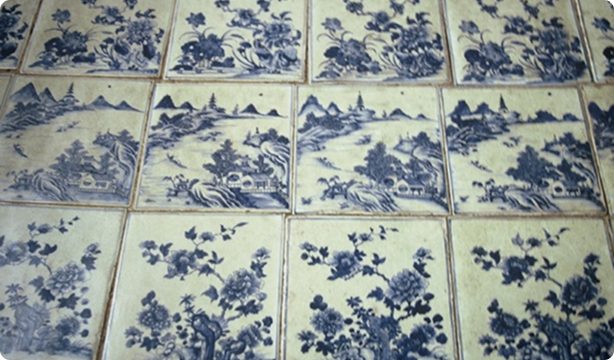
Brought in from China in 1760, the tiles bring art and history to life, each testament to the craftsmanship of another time.
Intricate and hand painted, no tile is identical to the other.

Honoring Women: Upper Gallery and Tradition

In the upper gallery, visitors will find a second Bimah, reserved for morning services during the Sabbath, festivals, and special occasions.

Beyond this is the women's section, a distinct architectural feature unique to Kochi synagogues. This gallery honors women by giving them proximity to the services and ceremonies conducted on momentous occasions.