
Jewish Holidays and
Festivals
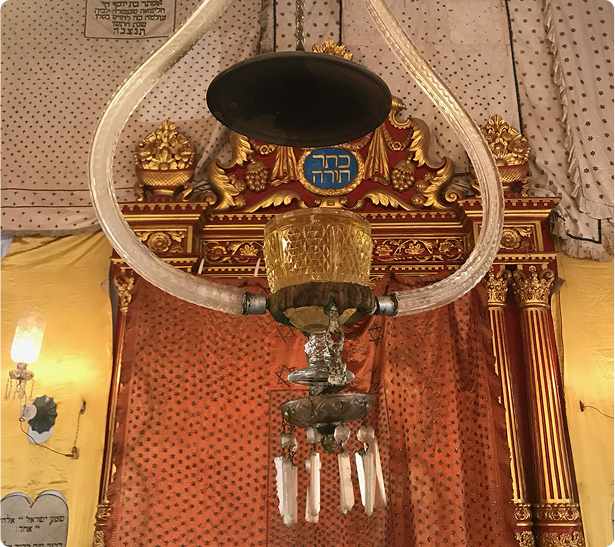
The Jewish calendar typically follows the lunar calendar, which means that the dates for the holidays and festivals may not always be on the same date every year.
Over the years, there have been many Jewish expats living abroad who have planned their vacations to coincide with Jewish holidays and festivals so they can celebrate them with the Paradesi community.
Apart from rituals and prayers, every festival observes certain customs and traditions, culinary specialities, peshathas (feasts in Malayalam), songs and melodies, and even specific colors unique to that festival.
Purim
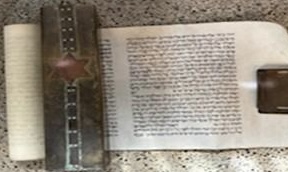
Purim (Hebrew: פּוּרִים, Pûrîm “lots”, from the word פור pur, also called the Festival of Lots) is a Jewish holiday that commemorates the saving of the Jewish people from Haman in the ancient Persian Empire, a story recorded in the Biblical Book of Esther (Megillat Esther).
In Kochi, instead of mishloach manot and costumes, the Paradesis had Purim money. And instead of rattles and whistles, they denounced Haman with wooden hammers.
The benches in the synagogue are a testimony to the enthusiasm with which the community banged their hammers during the megillah reading.
Pesach or Passover
Passover, also called Pesach, is one of the most important Jewish holidays. It is one of the three pilgrimage festivals that celebrates the story of the escape of Israelites from slavery in Egypt, as told in The Bible. Pesach starts on the 15th day of the Hebrew month of Nisan, which is considered the first month of the Hebrew year. Passover is celebrated for seven days in Israel and for eight days among the Jewish diaspora, based on the concept of yom tov sheni shel galuyot. In the Bible, the sevenday holiday is known as Chag HaMatzot, the feast of unleavened bread (matzah).
In Kochi, soon after Purim, the words one would hear on everyone's lips, especially the women's, would be "Pesach joli" (“joli” meaning “work” in Malayalam). A month or more would be spent in the preparations for Pesach, focusing around "cleaning". This began with the cleaning of spices, whitewashing and painting of houses, and intensive cleaning of rooms.
Pesach Customs Unique to Kochi
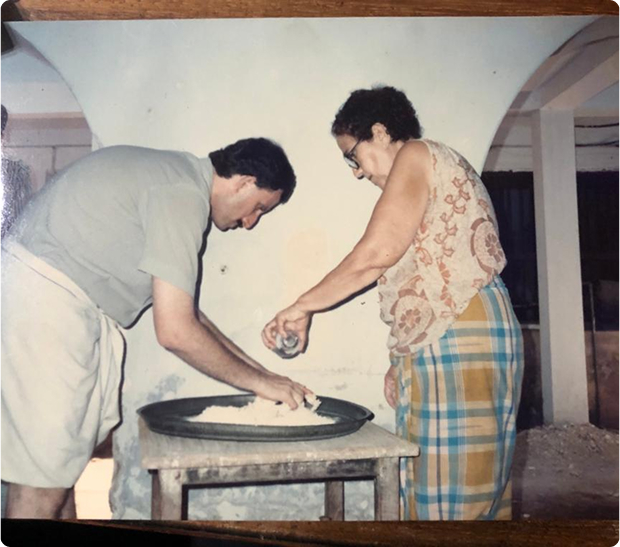
Homemade matzoth is a unique custom of preparing the unleavened bread, or matzot. The custom dates back to times where dates were coordinated in advance with the local flour mill, a day was set aside when the mill was cleaned and the women in the community would then take the wheat for grinding. It culminated in a communal matzamaking. The women and children gathered to spend the day making the matza or unleavened bread for each family.
Pesach in Kochi was also famous for the Duvoh (Cochini haroset) made from fresh dates involving an elaborate process that took an entire day. Duvoh is still made in Israel by a few families. Pesach wine was also entirely homemade by the Cochin Jews from handpicked raisins that were soaked in water, allowed to ferment and then pressed by hand in a winepress to extract the rich wellbodied beverage.
Shavuot
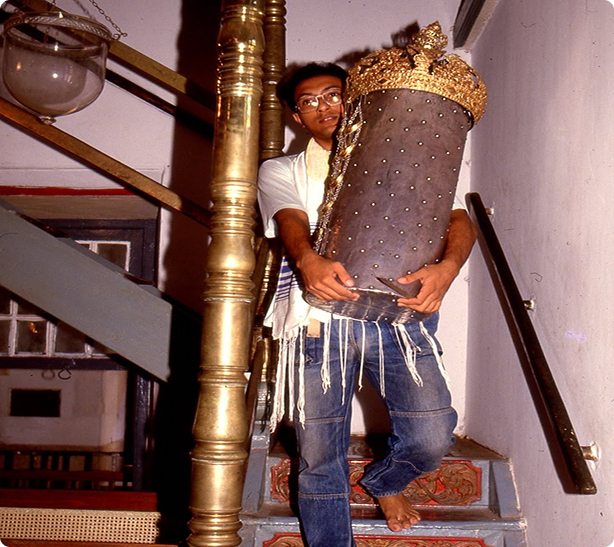
Shavuot, the feast of the Ten Commandments, is remembered for the unique tunes for the reading of the commandments and the torah portions. One unique custom among the Cochin Jews was the reading of each of the 613 commandments in a tune that was recited in precise harmony and diction for the verse of the commandment.
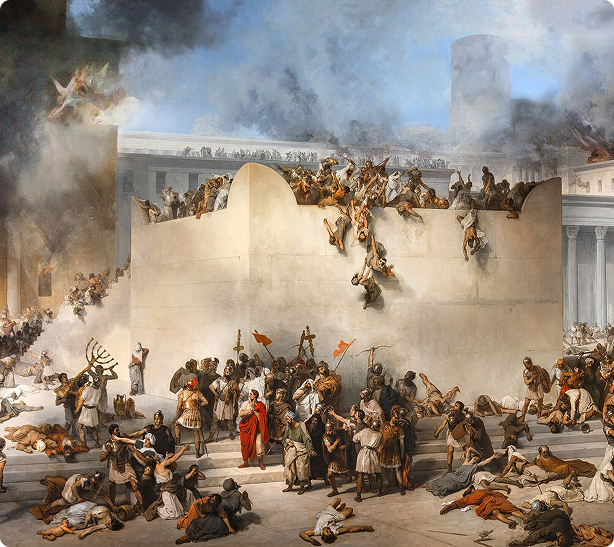
Tisha B'Av
This is a fast to commemorate the burning of the Second Temple. All the chandeliers in the synagogue would be covered with black cloth, the symbol of mourning. The benches were pulled forward. There were collections of ashes on the benches to symbolize the burning.
The worshippers sat on the ground and prayers were conducted by candlelight.
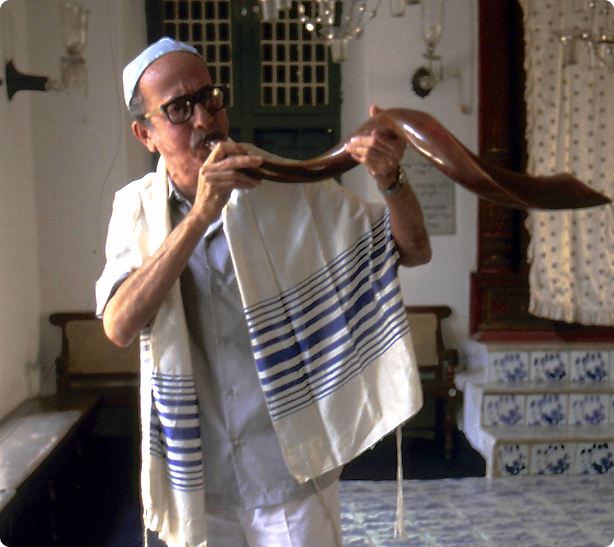
Rosh Hashanah
Also the Jewish New Year, Rosh Hashanah is the beginning of the High Holy Days. It is observed on the first and second days of the Hebrew month of Tishrei. The holiday is marked by the sounding of the shofar (a ram's horn), and prayers. It's a time for reflection, repentance, and seeking forgiveness.
In Kochi, the late Sarah and Dicky Cohen hosted bakashot sessions where ten to twenty community members gathered in the early hours to sing psalms. The Jewish cake, a rich aromatic fruity cake baked in tins, and Meruba, stewed and sugared apples or pears are the hallmarks of Rosh Hashanah.
The solemnity of Rosh Hashanah was echoed in the colors as traditionally only pale colors are worn for the festival.
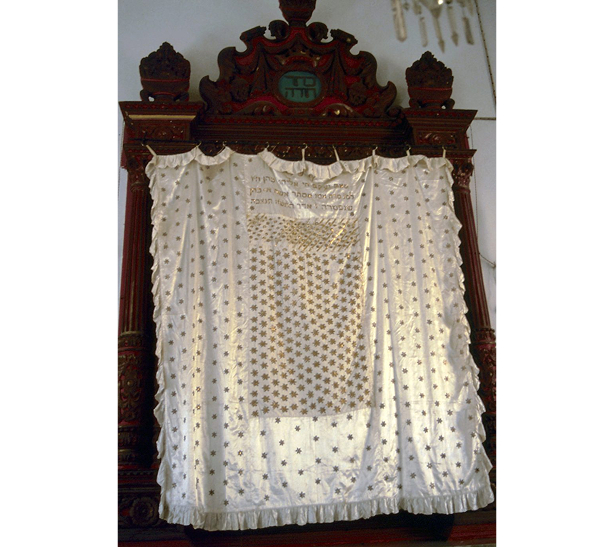
Yom Kippur
Yom Kippur is considered to be the holiest day in the Jewish calendar and is also called the ‘Day of Atonement’. It falls a few days after Rosh Hashanah and is observed by fasting, reflection, and prayers. Those observing Yom Kippur strictly refrain from working, fast for 25 hours, and seek forgiveness for their sins. The day ends at sunset with the Neilah service, a solemn closing prayer.
In Kochi, in keeping with Kippur practices, a white and gold parochet was used to cover the scrolls. The entire congregation would be attired in white. The ritual repetitions of the prayers were accompanied by some of the most enchanting melodies.
To break the fast, every table in the community would have the same special dishes, including burudur (a sort of a sponge cake), glassy ural (made of ground wheat and sugar), and French toast with fried plantains.
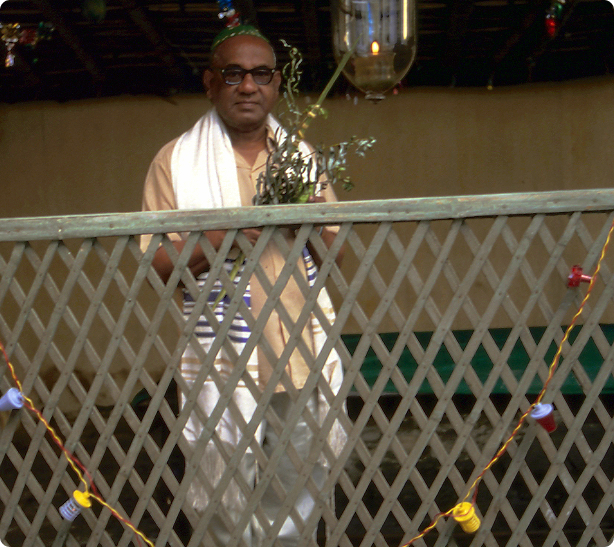
Sukkot
A festival of joy, Sukkot is also called the Feast of Tabernacles or Booths. Traditionally, during Sukkot, Jews would build temporary huts called sukkot and decorate them with fruits and branches, and eat their meals in them. This was done as a remembrance of the journey of Israelites through wilderness.
Green is the color for Sukkot. As per tradition, almost every family in Kochi would have an outdoor succah built of bamboo and plaited coconut palm leaves. Halls or rooms in houses next to the succah were decorated with tinsel, strings, and lamps. There were feasts during both days of Sukkot.
Shemini Atzeret & Simchat Torah
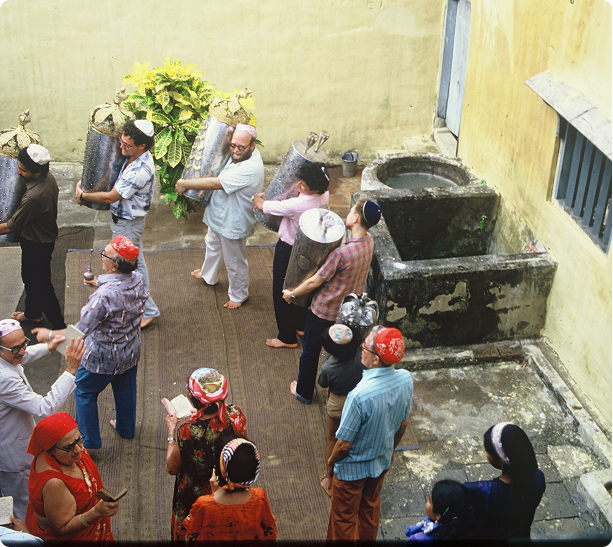
Right on the heels of Sukkot are Shemini Atzeret and Simchat Torah. While Shemini Atzeret is a day of reflection and prayer, Simchat Torah celebrates the completion of the annual Torah reading cycle and also the end of the High Holidays. Traditionally, Jews dance with Torah scrolls, sing and go back to the first chapter of Genesis.
In Kochi, Simchat Torah brought with it the sweet smell of jasmine, merriment, and red and gold colors. Here, Simchat Torah would begin with Shemini Chag Atzeret and continued with Simchat Torah on the second day. Everyone dressed in their finest, and jewelry for women was a must! Jasmine would be entwined in the hair.
Much has been written about the splendor of the Paradesi synagogue during Simchat Torah. In the courtyard outside the synagogue, stood the oillamp tree, a pyramidal contraption with 82 glasses of coconut oil, each with a wick. The effect when lit in the evenings was dazzling to say the least. The beauty was reflected within the synagogue as well. Walls covered in gold satin, and coloured parochets (curtains), and the pillars encircled with jasmine garlands. With the oil lamps and the chandelier lights blazing, it was a vision that could not be easily forgotten.
What was special about Simchat Torah in Kochi was that the women were allowed to participate with the men in singing songs while the torah scrolls were circulated within the Synagogue and to kiss the torah scrolls at the end of the prayers.
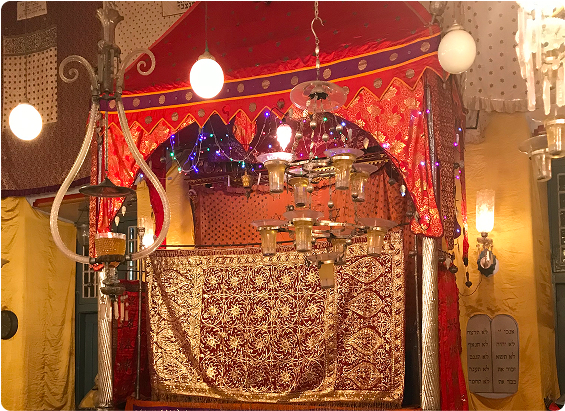
Also special was the fact that boys who were seven years old were called to the Torah to read the Haftorah, which follows the Torah reading. The haftorah "parting”, "taking leave", is a selection from the books of Nevi'im of the Hebrew Bible. The Simha Torah Haforah has a unique tune and would be read by the Haftorah boy who wore a sequined kippa and the gold chain around the shoulder. Even in Israel, the Jew Townies keep up this tradition for Simchat Torah.
In a lighter vein, no one can forget the water fights and the rotten eggs when anyone who walked in Jew Town accepted pails of water and rotten eggs as their due! It was an intense two days of merry making, prayers, joy, feasts, and enjoyment. It ended with the dismantling of the ark, and a procession from the synagogue stopping at the houses of the elders and warden of the community for speeches that ended with the Indian national anthem.
Chanukah
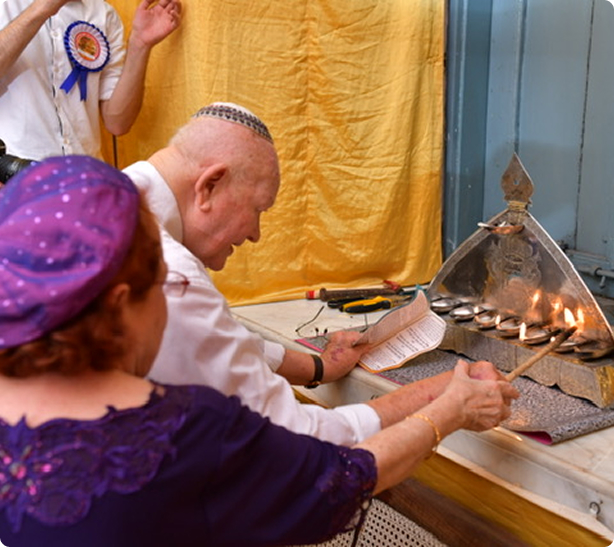
Chanukah is a festival memorializing a miracle while rededicating the Ancient Jewish Temple in Jerusalem during the 2nd century BCE. Tradition holds that a single urn of pure sacred oil that was left behind in the ransacked temple burned the eternal light in the temple for a full eight days instead of a single day.
In Kochi, candles and oil lamps were lit for the traditional eight days of observance and the children gathered together to celebrate with fireworks adding the light and color of the pyrotechnics to the joyful holiday.